ABOUT
FEEDSCONTACT
EMAIL DIGESTCANDY RATINGSTYPE
BRAND
COUNTRY
ARCHIVES
|
ChocolateWednesday, April 25, 2012
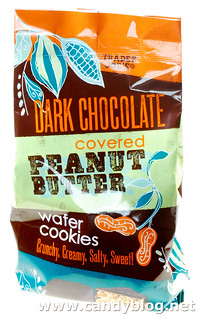
Trader Joe’s Dark Chocolate Covered Peanut Butter Wafer Cookies
The package promises that they’d be Crunchy, Creamy, Salty, Sweet! The gusseted bag is rather small, but predicts 8 full servings, if each serving is only four pieces. Not so easy. These are also calorie bombs, if I believe the Trader Joe’s Nutrition Facts label. It shows that that serving of four pieces is 26 grams (.92 ounces) and clock in at 160 calories. That’s 174 calories per ounce. I’m not sure that’s possible when the third ingredient is flour. But there you have it, one of the most calorie dense products I’ve ever reviewed.
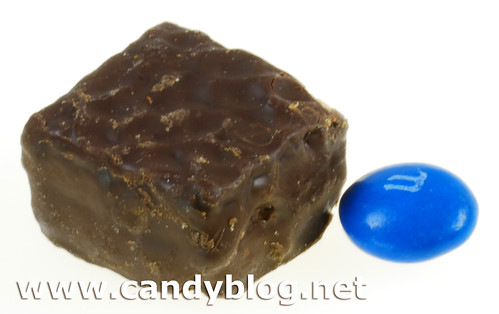
The pieces are pretty small, a little shy of a quarter of an ounce each and a little under one inch square and half an inch high. They don’t smell like much, I expected roasted peanut scent when I opened the package. I liked that, I liked that the dark chocolate must have sealed it all in.
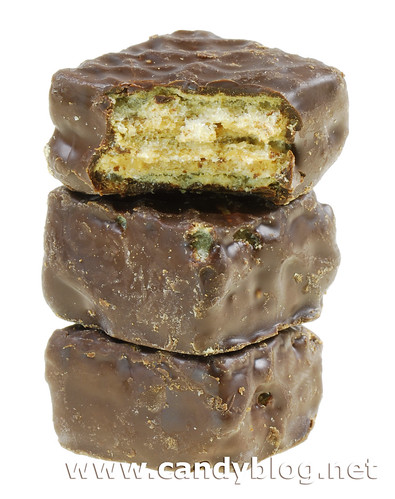
The dark chocolate is quite dark but has a good, immediate melt. It’s a little on the bitter side but has strong woody and charcoal flavors. The wafers are pretty thick, much thicker and airier than I expected. Their flavor is mild, but has a light malt note to it. The cream between the wafers is part peanut butter with a little milk or coconut oil to make it smoother. The texture combination is fantastic. The size of each piece makes it easy to cleave the layers apart with my teeth, or just eat it whole. (Eating it in two pieces can be messy, as some of the chocolate may fall off.) I found them filling, but not heavy like some peanut butter products can be. Each element was well balanced. The chocolate filled its role without overwhelming the peanut butter flavors, the peanut butter wasn’t so thick and sticky and the wafers were light and airy without getting gummy or tacky. Really what I wish they had was a better name that didn’t use 9 words. The pieces are great for sharing and munching as a snack. (Though be careful of that calorie count.) They look good in a small bowl, but I’d wager it’d be empty pretty soon. I would buy these again and would love to see them in other varieties. There’s no notice on the package or Trader Joe’s website about the origin or ethical sourcing of the chocolate and other ingredients. It’s all natural with no preservatives. Contains soy, wheat, milk and peanuts. Related Candies
POSTED BY Cybele AT 1:06 pm All Natural • Candy • Review • Trader Joe's • Chocolate • Cookie • Kosher • Peanuts • 8-Tasty • United States • Monday, April 23, 2012
Madre Chocolate: Dominican, Jaguar & Rosita de Cacao
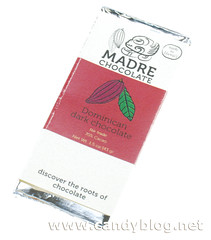
Madre makes their chocolate in Hawaii, but uses personally sourced beans from Central America, where chocolate was born. The Madre Chocolate Dominican Dark Chocolate bar is made with fair trade beans, and is 70% chocolate using organic sugar and Mexican vanilla. There are no emulsifiers. The bars are absolutely beautiful. They’re wrapped well, too. The bars come in a tough and really re-usable foil then inside a printed kraft paper sleeve. Many bars come in foil, but the foil tends to protect the bars only in the store, not after they’re opened. Here I was able to open the wrapper and rewrap the bar without any difficulty or mess.
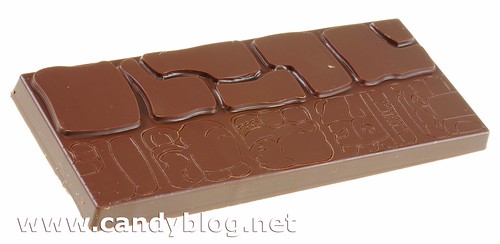
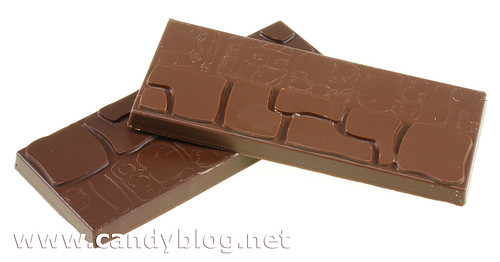
The bar itself has a beautiful mold, with designs inspired by Central America art and iconography. The Dominican Dark Chocolate bar is a deep reddish brown color with an excellent, crisp snap. The bar has a strong dried cherry note to it and some deep, oaky smoked flavors. It’s on the bitter side with a lot of berry and spice to it, there are notes of hibiscus, black pepper, chipotle and black tea. The melt is smooth, there’s some slight grit every once in a while, but for a chocolate with no emulsifiers, it’s exceptionally smooth with a crisp and brief dry finish.
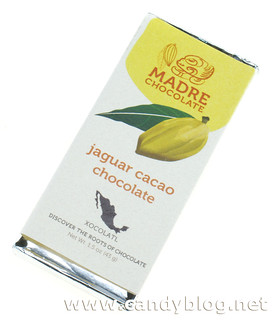
I’ve often wondered about the plants that chocolate comes from, like the diversity of citrus fruits. Theobroma is in the same family as the Mallows - which includes things like Kola Nut, Marshmallow, Okra and Cotton. Most chocolate aficinados already know about the three varieties of beans: criollo, forastero, and trinitario. So I was really excited to see that Madre Chocolate uses jaguar cacao, or mocambo which comes from the plant Theobroma bicolor. It’s another species of Theobroma and fruits in a similar fashion, in a large pod. The tree looks remarkably different but the beans can be treated in the same way: fermented, dried, roasted and conched. You can see more about all the Theobroma species on Wikipedia and pictures of the Mocambo on Fruitipedia. The ingredients are organic cacao beans, organic sugar, organic cocoa butter, jaguar cacao and vanilla. So this is not a pure jaguar bar, but a combination. It is definitely lighter than the Dominican, looking almost like a milk chocolate bar.
The texture is softer, almost lighter on the tongue than the Dominican. The flavors are also rather strange. There’s the standard cocoa notes, it’s woodsy and a smidge grassy. But then there are other flavors like ginger but also something more savory. I want to say leeks, but it’s not as obvious as something like onions, it’s just something faint in the background that isn’t quite “chocolate” in the traditional sense. The melt is smooth, a little sticky but not sweet. There’s a milky quality to it, but of course there’s no milk in it at all. For folks looking for a dark chocolate or a dairy-less chocolate that’s not so bitter or astringent, this is that bar.
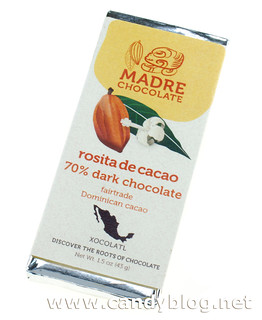
This bar also features the Dominican cacao of the first one I tried. The ingredients are the same: organic cacao beans, organic sugar, organic cocoa butter and then rosita de cacao and Mexican whole vanilla.
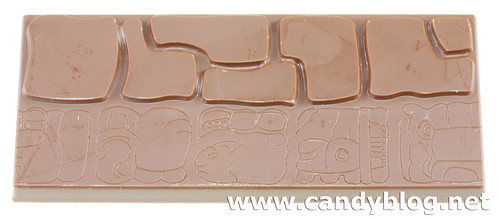
That’s the Jaguar on top and the Dominican bar on the bottom, to show the difference in the color. I’d read that rosita de cacao smells like maple sugar and I found it’s absolutely true. The woodsy, sweet notes of maple syrup were front and center when I unwrapped the foil. This bar was a little grittier than the plain Dominican, but had a very different flavor profile. The dried berry notes were still evident, but the woodsy profile was much stronger. It was very oaky, very vanilla with strong bourbon, leather and pipe tobacco flavors. The texture did have a little fibery grit to it, which I’m guessing is the flower. At times it was like fig seeds and seemed to intensify the soft florals if I chewed them. As part of a drink, I think I’d enjoy them more than in a bar. It wasn’t just the texture but the strength of the very perfumey vanilla that seemed to overwhelm some of the deep chocolate notes. It really softened the profile overall of the intense Dominican beans. This exploration into the flavors and influences of modern chocolate was fascinating. It provided a lot more than just the few lines in books and articles that talk about the more savory foamy chocolate drink that was first served to Westerners. Like many of the new bean to bar artisan chocolate makers, Madre is interested in many of the historical and sociological aspects of chocolate, responsible sourcing as well as exploring and recreating the rich history of chocolate for modern humans. It’s more expensive than buying a history book to try them all, but I guarantee you won’t forget it. I got my bars because I sponsored the group’s initiative to source Mexican cacao on Kickstarter. You can buy them on their website and they list stores that also carry the bars there. Related Candies
POSTED BY Cybele AT 3:46 pm All Natural • Candy • Review • Chocolate • Ethically Sourced • Organic • 7-Worth It • 8-Tasty • United States • Friday, April 20, 2012
Trader Joe’s Almondictive Bits
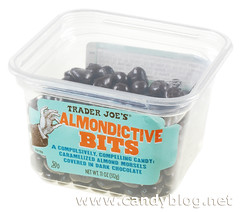
A compulsively, compelling candy, caramelized almond morsels covered in dark chocolate I often complain that Trader Joe’s doesn’t take the time to name their products beyond a description of what it actually is. So kudos to them for coming up with something original (so original that all google searches lead back to Trader Joe’s references). But most of all, I appreciate that Trader Joe’s used the slightly more proper addictive as their source instead of addicting. Of course since it’s a made up word, it also reminds me of the vindictive, and I don’t like mean almonds.
The pieces vary in size, some as large as a peanut but most about the size of a garden pea. The 45% dark chocolate coating is quite deep looking and glossy. There’s a slight coating of glaze on it, but it melts very quickly. The chocolate is a bit on the bitter side with lots of brownie batter and coffee notes to it. The centers are crispy caramelized chunks of almonds. Some pieces were pretty much all toffee while others were very nicely roasted almonds with a hint of crunchy toasted sugar. The nuttiness made these just a little different from their chocolate covered toffee bits they also sell in the small bags by the register. It’s a satisfying combination of sweet, salty and bitter along with a creamy chocolate coating and different textures of crunch in the center. I wish the pieces were just slightly larger or more consistently large. The little bits at the bottom, which were like ball bearings and mostly chocolate weren’t doing much for me. These would be a great ice cream topping or added to a nuts & pretzel trail mix. As with many of Trader Joe’s products, I don’t know where these were made or the ethical sourcing of the chocolate within. They are Kosher, contain dairy, almonds, soy and might have traces of wheat, peanuts and other tree nuts Related Candies
POSTED BY Cybele AT 1:55 pm All Natural • Candy • Review • Trader Joe's • Chocolate • Kosher • Nuts • Toffee • 8-Tasty • United States • Wednesday, April 18, 2012
Niederegger Marzipan Classics
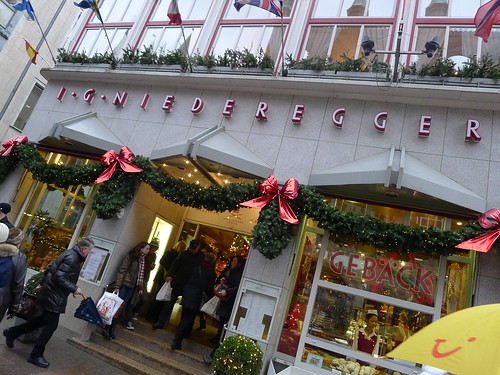
One of the places that sealed the deal to get me to attend was Lubeck, home to Niederegger Marzipan. If there was a candy that I was introduced to through the blog that changed my mind about a long held prejudice, it was Niederegger’s Cappuccino Marzipan bar. Lubeck is actually home to many marzipan makers. At one time there were dozens, now there are a handful, but enough of them that there is a strict standard they must follow if they wish to be called Lubecker Marzipan. Kind of like sparkling wine can’t be called Champagne unless it’s from Champagne. How Lubeck became a center of marzipan creation when they don’t actually grow the sugar or almonds necessary for its creation is kind of an odd tale. Lubeck is a Hanseatic City, which means it was a member Dudesche Hanse, an economic alliance of cities and merchant guilds in Northern Europe starting in 1358 until the 1860s when it was one of the last remaining members. As a center of trade Lubeck had access to the almonds and sugar it needed to make marzipan and the shipping routes to export it.
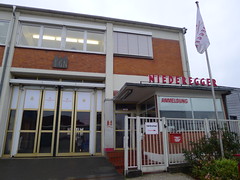
In 1806 Johann Georg Niederegger purchased Maret Confectioner, where the current Niederegger Cafe stands to this day. The company is still family owned, in its seventh generation. Niederegger is widely regarded as one of the best marzipans from Germany. It’s characterized by its consistent texture and high quality. The marzipan is made in one facility, just outside of town in the traditional style of open copper pots.
The almonds sourced for Niederegger are from Spanish, mostly Marcona almonds though at times they also source from Italy. To start the almonds are cleaned and then blanched and then the fibrous peels are removed. There’s a lot of hand work involved in the entire process, as workers pick over the almonds after the blanching process to keep the quality high.
The almonds are then mixed with sugar and ground and cooked in open copper pots. The staff were hesitant to give us exact times for how long these processes take, but it’s probably more than an hour and less than a day.
The cooking and mixing is carefully supervised by the cooks. The day we were there it was cold and rainy and it’s pretty much assured that the room was probably not heated and it was quite balmy. I can’t imagine what it’s like in there even with air conditioning in the summer. The pots generate quite a bit of steam and moisture. Once the marzipan is finished multiple pots are dumped into a large one and quickly cooled with dry ice. The last step is the addition of rosewater, which I believe has a touch of alcohol in it. The marzipan is then molded into blocks and sent along to other parts of the factory for different purposes.
Though Valentine’s Day isn’t as big of a deal in Europe as North America, the Niederegger Hearts are extremely popular year round but do show up in American stores for special holidays.
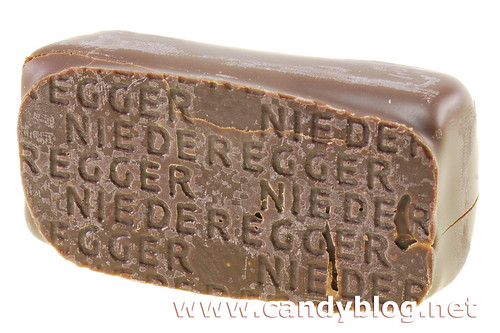
All enrobed chocolates had the Niederegger name embossed on the bottom.
Because the company makes such a huge variety of shapes, sizes, varieties and packaging styles, much of the work is done by humans, who are far more adaptable. This also helps to account for the higher price of Niederegger products.
In addition to the machine made products, some are molded by hand and then hand decorated. Though no photos were provided, we visited one room where they did custom molded pieces, especially for corporate clients as well as favors for weddings that can be personalized for the couple.
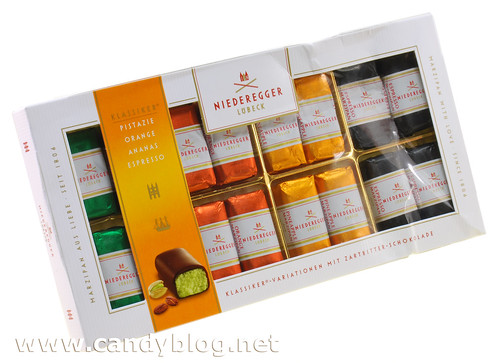
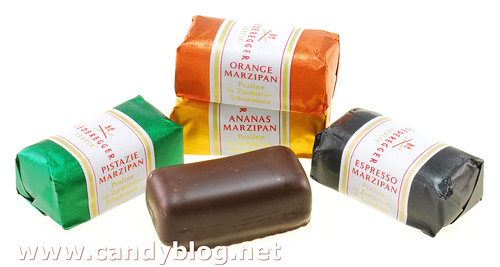
Though many of the Niederegger products are expensive when priced out by the pound, there are plenty of items available for less than a buck. They have stick or log versions of their bars which are usually about one Euro and their little loaves are about 35 cents or so. The box above is their Klassiker which featured pistachio, orange, pineapple and espresso. I think this assortment is about 6 Euros. It’s one of the products I see for sale in the United States around Christmas but often for somewhere more in the neighborhood of $9 or $10.
The loaves are enrobed, like the hearts in the factory photos above. I generally prefer enrobed chocolates, I like the way the coating adheres to the fillings better than molded products.
At the end of our tour, the Niederegger folks gave us a sampler tray of their most popular current products. (Later we also went to their cafe and shop where I bought about 40 Euros more of stuff.)
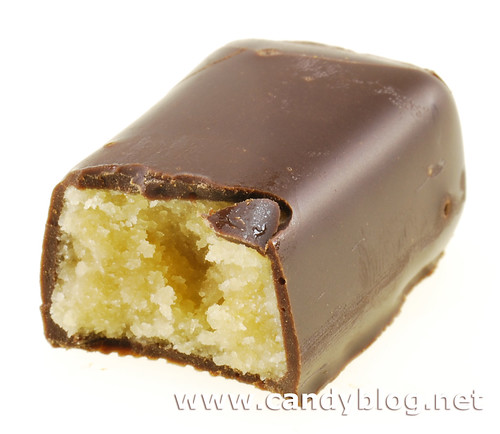
I think the little loaves are my favorite. The chocolate is quite thin and the foil is always cute. They’re barely an inch long, so it’s not even two full bites. Since there’s little chocolate, it’s very much about the marzipan. There’s not as much sugar in the Niederegger marzipan as in some other varieties. Also, it has a more rustic grind to it, it’s not a smooth dough or paste like some. Think of it like peanut butter cookie dough - it holds its shape but has a slight grain. The sugar is completely integrated though. There’s a toasty flavor throughout. The trick with the little loaves though is that they get dried out quickly. I found that there’s no point in hoarding them, they should be eaten within 3 months if possible, and be sure to keep them in a sealed tin or zippered bag.
The long bars solve that dryness problem with a thicker chocolate coating and a fully sealed plastic wrapper. Those seem to seal the moisture in much better. The Espresso Marzipan is by far my favorite of their standard flavors. So much so that I pick them up whenever I see them at a trade show, gourmet shop or when in Europe. The marzipan is generally sweet, but the dark toffee flavors of the espresso really balance it out and even give it a little bitter edge that pairs well with some of the bitter note of the almonds.
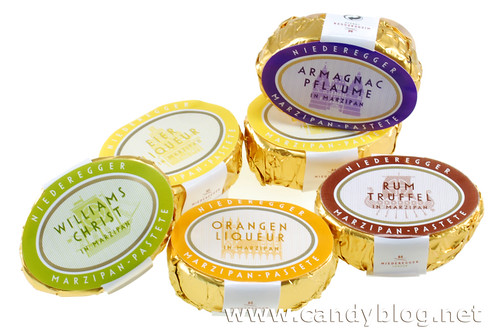
In that big assortment from the Niederegger folks I got to try something new, their liqueur marzipans: Rum Truffel - this was the most traditional and perhaps the most boring of the set. The reservoir center had a little slab of rum infused chocolate truffle. It was sweeter than the others, but had a nice little kick to it. Orangen Liqueur is moister than most of the other Niederegger marzipans I’ve had. It’s hard to tell if there was a liquored up center, which was a little darker than the rest of the marzipan, or that was just where the stuff concentrated itself. The scent has a light touch of orange zest to it. The flavor of the marzipan is delicate, the chocolate creamy and only a very thin shell of it to seal in the marzipan and cut the sweetness. The bite of the liquor isn’t intense or harsh, just a light warming. I liked this one quite a bit, and tasted it compared to the classic Orangen piece as well. The liqueur does add a little more zest and less juice flavor to it, and the alcohol’s ability to make me blush probably gives me the impression that it’s said something flattering. Armagnac Pflaume - is a plum brandy. The idea didn’t really sound that appealing to me, but I know that I’ve enjoyed many of the things that the Japanese have done with plums and confectionery, so I thought I’d give it a chance. This piece has a little ribbon of plum jam of some sort in the center. The flavor is a little like brandied prunes, tangy and with deep cherry and raisin notes. The alcohol was quite distinctive and hit me high in my chest, between my collar bones. Williams Christ is a Pear William brandy puree in the center of the marzipan. Though it looked rather like the Armagnac one, it definitely tasted distinctly of pear and a little like ripe bananas.
Eier Liqueur - is made with an egg liqueur. This is one of those drinks that I’ve never actually had except in confections (all German) so it’s hard for me to compare it to anything else. It’s like a creamy vanilla pudding center, with a slight rum buzz to it. I liked it, though the idea of egg cream in a candy is a little strange at first, and then I remember my love of nougat and custards.
One of the newer flavors I was really excited to pick up in Germany was their Niederegger Vodka Fig Marzipan. They’re wrapped in bright purple foil and came in a long package like the sticks, but really just a strip of the loaves. Again, freshness was the key here. The center had a definite grain alcohol blast to it. The figs were well supported by the delicate flavors of the almond paste and the vodka did a good job of helping disperse that flavor throughout. On the whole, I’m not sure I needed the vodka, just a fig marzipan would be fine with me. And when I say fine, I mean, I wish there were fig marzipans available easily. I might have to make my own.
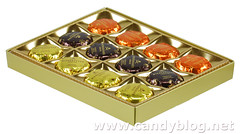
The box was very simple, as are most of their packages. It was a paperboard box with a metallic gold plastic tray with little sections for each piece of candy. It protected the pieces extremely well (this was early in my trip and had to go on and off the bus every day for nearly 1,000 kilometers plus the flights home). So the inside did well, but the exterior got quite dinged up. Since it was a seasonal product it was extremely fresh, the centers were soft and moist.
Arabisch-Mocca - toasty flavors of coffee and a little hint of chocolate in the center. The marzipan has more of a toffee and coffee flavor than anything almond. The dark chocolate shell seals it all up and has a nice bittersweet component that also gives it a creamy start.
Dattel-Honig is the only milk chocolate piece of the set. It smells like ripe bananas. In fact, it tastes like ripe bananas. Like actual fermented bananas, with a light alcoholic and tangy note towards the top. The milk chocolate and the dates keep it all rather sweet. I didn’t catch much on the honey side of things. Ingwer is one of my favorite bars from Niederegger. The little pattie version is a gem as well. The ginger is soft and glace style, the dark chocolate keeps it all from being to sweet or sticky. There’s less chocolate in this version than the bar, and more of an alcoholic bite as well.
(Disclosure Note: The trip to Germany was sponsored, so I did not pay for my airfare, ground transportation, accommodations or food while I was there. At the factory tours we were given generous samples to consume on site as well as some to bring home. Any reviews of those products will be noted as to that fact. But I also brought a couple hundred Euros with me and spent them liberally and almost exclusively on candy both from the companies we were introduced to as well as many other Germany/European products that I found in my prowlings of grocery stores, department stores and the factory outlets.) Related CandiesTuesday, April 17, 2012
Rolo Minis
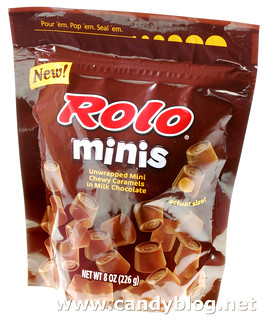
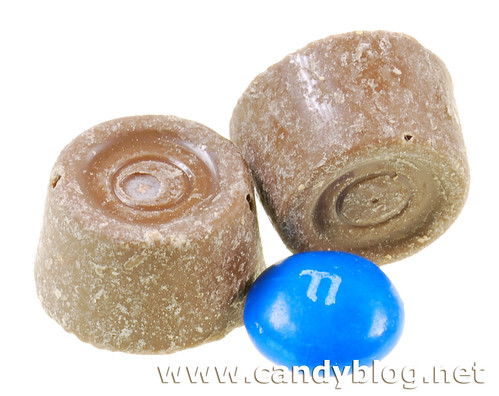
Rolos are available in two formats currently, the rolls with an individual serving and foil wrapped versions which are usually sold in mixes in bags along with other Hershey’s favorites. (Here’s an early Candy Blog review of Rolos.) Rolo Minis are new from Hershey’s, to go with the other items in the new Hershey’s minis line like Hershey’s Drops and Reese’s Peanut Butter Cup Minis. They’re a smaller version of the popular candy, though might not have the precise ratios of elements. The point, I guess, is to provide candies that don’t have all that messy packaging:
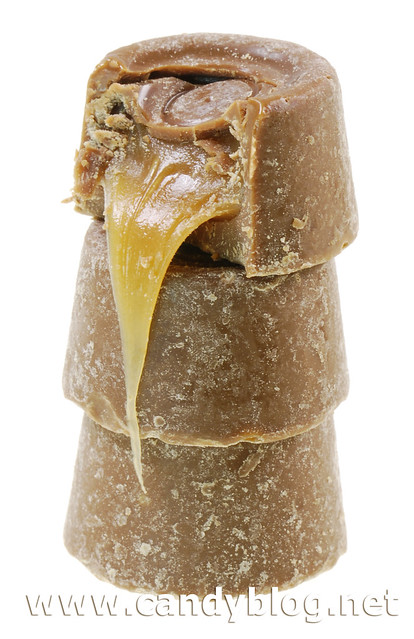
Why is it called a Rolo? One of the key features wasn’t what the candy was, but how it was packaged, it was a roll. That’s it. But here it is in a bag. They kind of roll, but just in small circles. They’re just little knobs of milk chocolate with a chewy caramel filling. That could be called anything. Geometrically speaking, the form of a Rolo is called frustum-shaped. That is, a cone that has had its pointy end lopped off. So the base is wider than the top. In the case of Rolos, there’s also a little rim around the top, which has no purpose as far as I know. There is no logo or any other branding on the candy itself. The pieces are rather scuffed up from rolling around in that bag. In fact, they’ve come all the way from England, where they were made. Seemed a little odd to me, but these are imported from England and made by, well, I’m guessing Nestle.
Though the chocolate is a bit dry looking, it’s actually pretty good. It’s smooth enough to melt well, the caramel center is stiff enough to provide a good chew but not so hard to pull out any teeth. They remind me of a softer version of Milk Duds back when they were made with real milk chocolate. Overall, they’re much better, less sweet and smoother than the large version of Rolos. I found myself munching on these a lot more readily than the regular Rolos. They go well in a mix, too, with some nuts and pretzels. Related Candies
POSTED BY Cybele AT 4:24 pm Candy • Morselization • Review • Hershey's • Caramel • Chocolate • Kosher • 6-Tempting • United Kingdom • Target • Thursday, April 12, 2012
Pocky Peanut Crush
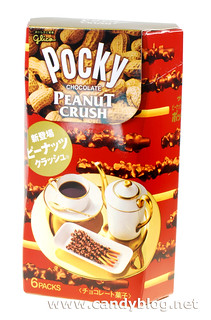
The package is big (and came with a similarly hefty price tag) with six little packages of four sticks in a cool flip top box. The serving suggestion is black coffee served in fine china on a gold tray. I’m going to just eat it out of the cellophane package with some water.
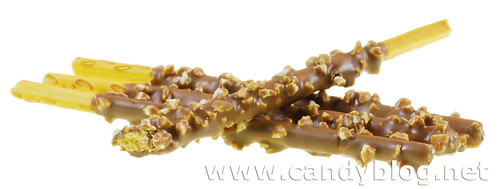
They smell great. It’s a dark roasted scent that’s fresh and reminded me immediately (oddly enough) of a really good Nutty Buddy ice cream cone. The crushed peanuts adhere to the short cookie stick with some middling milk chocolate (it might be mockolate, a chocolate compound with some extra vegetable fat in it). The flavors really are about the peanuts and the chocolate is just there to keep it all stuck together and add a little sweet creamy note. The cookie stick of Pocky isn’t very sweet and though it’s crispy, I woudn’t really call it light either. It has a light toasted flavor ... think of it as the difference between a biscuit and a scone. The whole thing is barely sweet, more like a snack, thought’s not salty either. I would definitely buy these again if not for the expense - it was $5.49 for the box which means almost a buck for each little packet inside. But each package was rather filling and satisfying, a good blend of protein, carbs and easy sugar. I have no idea about Glico’s environmental standing or their ethical sourcing of ingredients. The product contains peanuts, wheat, dairy, almonds and soy. But maybe it’s shellfish and egg free, you’ll have to check with the maker. Related Candies
Thursday, April 5, 2012
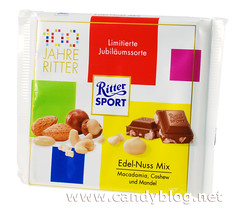
Ritter Sport 100th Anniversary Edel-Nuss Mix + Bonus Previews
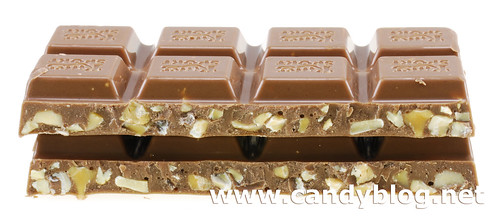
Though the company is celebrating their 100th year, the Ritter Sport square bar, as we’ve come to know it, is not quite as old as that. The Sport bars were introduced in 1932 ... so in 20 years you can look forward to another centennial. The bar is a simple one, just milk chocolate with a blend of crushed nuts: almonds, cashews & macadamia nuts.
I picked up my bar in Germany at Kaufhof in December, but they may be available at import shops in North America and airports during the year. The bar is lovely and really quite tasty. It’s odd, the milk chocolate is sweet and smooth, as usual. The nuts are crunch and plentiful. But the flavor is quite interesting. For a while after munching on the bar I was convinced there was honey in it, it has that same sort of toasted almond and honey flavor that Toblerone has. But there was none in the ingredients, so I can only credit the toasting of the nuts that give it that soft, sweet and nutty flavor. I would buy this bar regularly. It doesn’t quite dethrone my favorite, the Knusperflakes (Corn Flakes) bar, but it’s terrific in its own right.
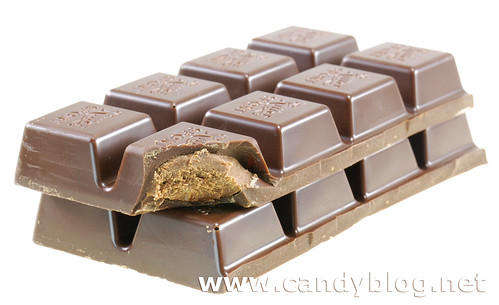
Ritter Sport Dunkle Pfefferminz is a dark chocolate bar with a peppermint flavored dark chocolate cream center. It also features a dash of alcohol, giving it a creme de menthe sort of blast.
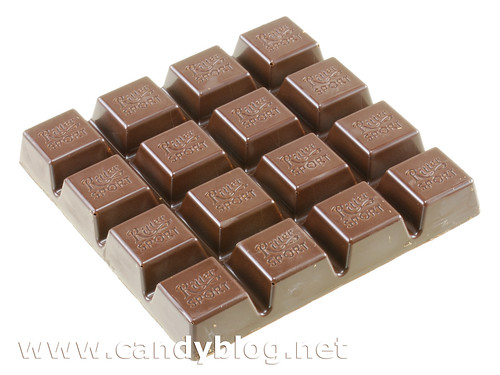
The bar looked great.
The cream center was smooth and had a strong peppermint flavor, but not so strong as to overpower the dark chocolate notes, which were slightly acidic and woodsy. It’s pretty decadent and silky, I didn’t feel the need to eat more than two or three sections at a sitting. I hope this comes to the United States at some point, it’s a keeper and unlike anything else we have on the market.
One other item I picked up in the back room was a bag of these little bon bons. They were simply called Pfefferminz and in a clear plastic bag. Each individual piece was wrapped in an unmarked aqua wrapper. I have no idea what their purpose was, but the center was not quite the same as the Dunkle bar. They were good, but milk chocolate and a little more fudgy and firm.
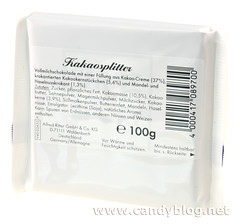
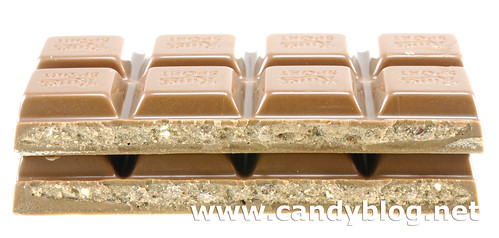
I believe kakaosplitter (kakaokernstuckchen) is the German word for cacao nib. The bar is milk chocolate and features a firm chocolate cream filling studded with crispy cacao nibs.
The bar is quite milky and has a good nutty flavor overall. The nibs are toasted in a way that seems to have caramelized them. So instead of being chewy or dense, they’re quite light and crispy, but with a sort of uneven chocolate flavor, depending on the bite. I liked the treatment of the nibs, but I didn’t care for the overall sweetness of the bar. It makes me wish I’d found this hazelnut and nib solid bar.
The last bar I picked up looked just like the others on the outside, a generic white with the simple name of Ritter Sport Kokosmakrone. Honestly, I didn’t know what I was picking up because I didn’t know what Kokosmakrone was, I thought it was another cocoa nib confection. Instead it’s a coconut cream. How fun! Aside from the Mounds and Almond Joy bars, there’s not much in the real coconut realm in candy bars in the United States.
The bar is milk chocolate again with a white cream filling with both toasted coconut and rice flakes for crunch. It smells an awful lot like coconut, the chocolate is infused with it to the point that the chocolate flavors are lost. I had to sequester the bar in its own ziploc bag before I finished it because I was afraid it was going to make my 100 Jahre bar taste weird. The filling is sweet and milky with a little salty hint. The coconut is more of a flavor than a texture, the crispies add a new dimension of texture that you don’t really get in American coconut candies. Mostly I like this because it’s not like anything else you can get for less than $2. But, if I want coconut, I’m probably going to go for a Mounds bar. In all, I love Ritter Sport’s sense of adventure. The bars are made in a factory that processes a lot of different nuts, soy, dairy and products that may contain gluten. The Ritter Sport company sources much of their cacao from South and Central American and says it’s committed to ethical sourcing. Related Candies
POSTED BY Cybele AT 1:00 pm All Natural • Candy • Review • Ritter Sport • Chocolate • Coconut • Limited Edition • Mints • Nibs • Nuts • 8-Tasty • Germany • Thursday, March 29, 2012
Ovomaltine Chocolate Bar
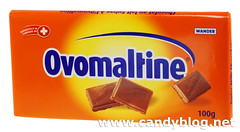
Of interest to Candy Blog readers though is the line of confections made by Wander, the Swiss company that makes Ovomaltine. I picked up this 100 gram (3.5 ounce) Ovomaltine Milk Chocolate Bar, called Schweizer Milkchschokolade mit Ovomaltine in Germany. The front of the wrapper is bold and uncomplicated, just the familiar logo of the drink and some squares of chocolate.
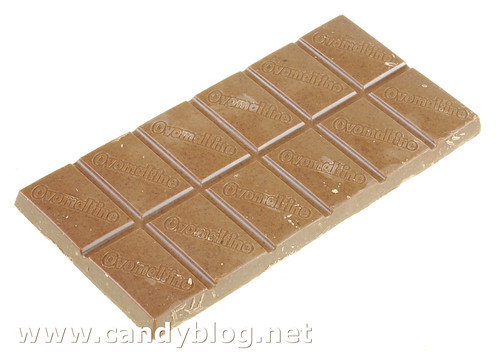
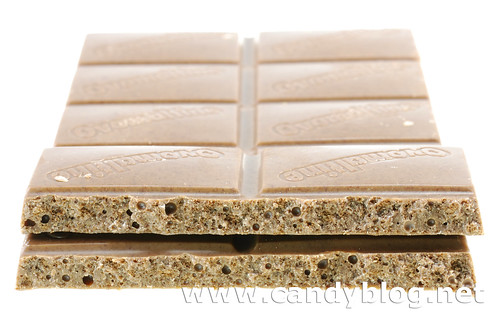
The bar isn’t really that attractive. The squares all bear the logo for the Ovomaltine, but the inclusion of the actual malted milk powder makes the surface of the chocolate bar itself a bit dusty looking. The segments are nicely sized and scored for easy breaking and sharing. Ovaltine is not just a flavoring for milk, it’s also supercharged with vitamins and minerals. The chocolate bar is no different, though it’s not exactly the same as swallowing a couple of multivitams there are a few B vitamins and minerals in there.
The bar smells just like a jar or Chocolate Ovaltine. There’s a light milky and malty note to it along with that scent of B Vitamins. I don’t know what that smell is, but it reminds me of baby formula. The bar is grainy, the flavors are bold, the malt is front and center. The milk chocolate is passable, it’s smooth but barely gives a cocoa kick to the bar. There’s a strange umami quality to the whole thing, it’s not too sweet but still tastes like a treat. I would definitely eat this bar regularly if I could find it.
If you want to know more about the origin of Ovaltine, here’s a good article from Slate shortly after Nestle scooped up the rights to the powdered mix in the US. Also, Wikipedia explains why it’s called Ovaltine in English speaking regions instead of Ovomaltine ... there was a typo on the trademark registration. More importantly, in France they have a version that’s spreadable like Nutella or Speculoos. Please, someone send this to me! Related Candies
POSTED BY Cybele AT 12:51 pm Candy • Review • Chocolate • Malt • 7-Worth It • Switzerland • 
|
Meticulously photographed and documented reviews of candy from around the world. And the occasional other sweet adventures. Open your mouth, expand your mind.
  SEARCHSearch the Candy Blog archives

    
FEATURED NEWS ITEMS
COPYRIGHT NOTICEAll content (text and photos unless otherwise credited) is copyright 2005-2026 by Cybele May Please do not use my photos without prior permission directly from me, they represent what I ate in preparation for these reviews and are not to be used for other purposes. Design by Hop Studios
|
||||||||||||||||||||||||||||||||||||||||||||||||||||||||||||||||||||||||||||||||||||||||||||||||||||||||||||||||||||||||||||||||||||||||||


 SUPERB
 YUMMY
YUMMY  TASTY
TASTY  WORTH IT
  TEMPTING
  PLEASANT
  BENIGN
  UNAPPEALING
  APPALLING
  INEDIBLE