ABOUT
FEEDSCONTACT
EMAIL DIGESTCANDY RATINGSTYPE
BRAND
COUNTRY
ARCHIVES
|
ReviewWednesday, April 18, 2012
Niederegger Marzipan Classics
One of the places that sealed the deal to get me to attend was Lubeck, home to Niederegger Marzipan. If there was a candy that I was introduced to through the blog that changed my mind about a long held prejudice, it was Niederegger’s Cappuccino Marzipan bar. Lubeck is actually home to many marzipan makers. At one time there were dozens, now there are a handful, but enough of them that there is a strict standard they must follow if they wish to be called Lubecker Marzipan. Kind of like sparkling wine can’t be called Champagne unless it’s from Champagne. How Lubeck became a center of marzipan creation when they don’t actually grow the sugar or almonds necessary for its creation is kind of an odd tale. Lubeck is a Hanseatic City, which means it was a member Dudesche Hanse, an economic alliance of cities and merchant guilds in Northern Europe starting in 1358 until the 1860s when it was one of the last remaining members. As a center of trade Lubeck had access to the almonds and sugar it needed to make marzipan and the shipping routes to export it.
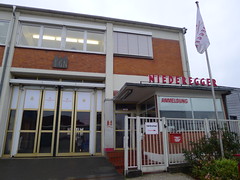
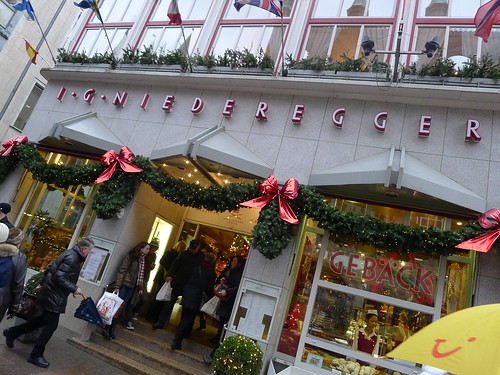
In 1806 Johann Georg Niederegger purchased Maret Confectioner, where the current Niederegger Cafe stands to this day. The company is still family owned, in its seventh generation. Niederegger is widely regarded as one of the best marzipans from Germany. It’s characterized by its consistent texture and high quality. The marzipan is made in one facility, just outside of town in the traditional style of open copper pots.
The almonds sourced for Niederegger are from Spanish, mostly Marcona almonds though at times they also source from Italy. To start the almonds are cleaned and then blanched and then the fibrous peels are removed. There’s a lot of hand work involved in the entire process, as workers pick over the almonds after the blanching process to keep the quality high.
The almonds are then mixed with sugar and ground and cooked in open copper pots. The staff were hesitant to give us exact times for how long these processes take, but it’s probably more than an hour and less than a day.
The cooking and mixing is carefully supervised by the cooks. The day we were there it was cold and rainy and it’s pretty much assured that the room was probably not heated and it was quite balmy. I can’t imagine what it’s like in there even with air conditioning in the summer. The pots generate quite a bit of steam and moisture. Once the marzipan is finished multiple pots are dumped into a large one and quickly cooled with dry ice. The last step is the addition of rosewater, which I believe has a touch of alcohol in it. The marzipan is then molded into blocks and sent along to other parts of the factory for different purposes.
Though Valentine’s Day isn’t as big of a deal in Europe as North America, the Niederegger Hearts are extremely popular year round but do show up in American stores for special holidays.
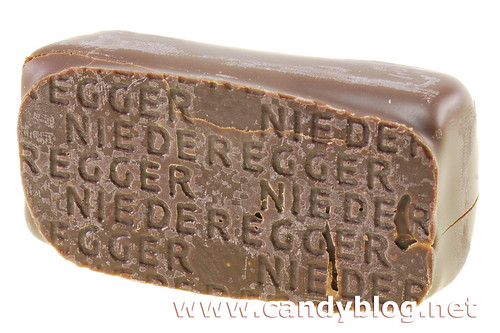
All enrobed chocolates had the Niederegger name embossed on the bottom.
Because the company makes such a huge variety of shapes, sizes, varieties and packaging styles, much of the work is done by humans, who are far more adaptable. This also helps to account for the higher price of Niederegger products.
In addition to the machine made products, some are molded by hand and then hand decorated. Though no photos were provided, we visited one room where they did custom molded pieces, especially for corporate clients as well as favors for weddings that can be personalized for the couple.
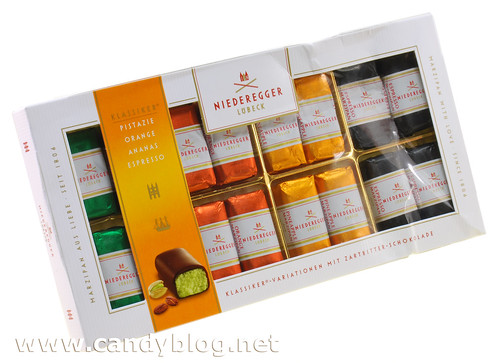
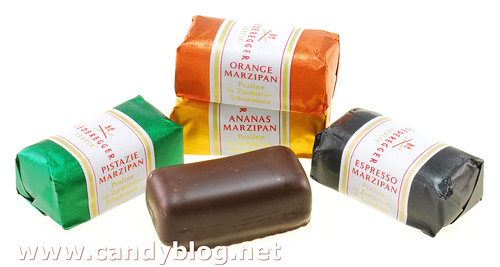
Though many of the Niederegger products are expensive when priced out by the pound, there are plenty of items available for less than a buck. They have stick or log versions of their bars which are usually about one Euro and their little loaves are about 35 cents or so. The box above is their Klassiker which featured pistachio, orange, pineapple and espresso. I think this assortment is about 6 Euros. It’s one of the products I see for sale in the United States around Christmas but often for somewhere more in the neighborhood of $9 or $10.
The loaves are enrobed, like the hearts in the factory photos above. I generally prefer enrobed chocolates, I like the way the coating adheres to the fillings better than molded products.
At the end of our tour, the Niederegger folks gave us a sampler tray of their most popular current products. (Later we also went to their cafe and shop where I bought about 40 Euros more of stuff.)
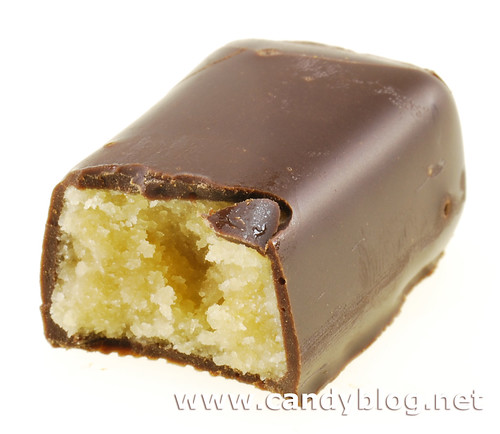
I think the little loaves are my favorite. The chocolate is quite thin and the foil is always cute. They’re barely an inch long, so it’s not even two full bites. Since there’s little chocolate, it’s very much about the marzipan. There’s not as much sugar in the Niederegger marzipan as in some other varieties. Also, it has a more rustic grind to it, it’s not a smooth dough or paste like some. Think of it like peanut butter cookie dough - it holds its shape but has a slight grain. The sugar is completely integrated though. There’s a toasty flavor throughout. The trick with the little loaves though is that they get dried out quickly. I found that there’s no point in hoarding them, they should be eaten within 3 months if possible, and be sure to keep them in a sealed tin or zippered bag.
The long bars solve that dryness problem with a thicker chocolate coating and a fully sealed plastic wrapper. Those seem to seal the moisture in much better. The Espresso Marzipan is by far my favorite of their standard flavors. So much so that I pick them up whenever I see them at a trade show, gourmet shop or when in Europe. The marzipan is generally sweet, but the dark toffee flavors of the espresso really balance it out and even give it a little bitter edge that pairs well with some of the bitter note of the almonds.
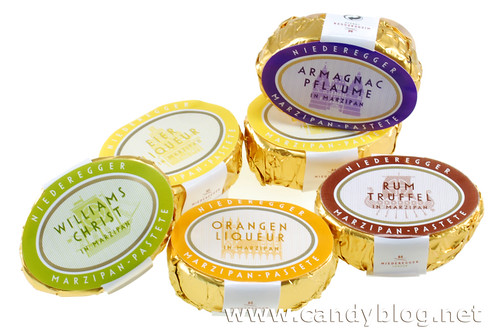
In that big assortment from the Niederegger folks I got to try something new, their liqueur marzipans: Rum Truffel - this was the most traditional and perhaps the most boring of the set. The reservoir center had a little slab of rum infused chocolate truffle. It was sweeter than the others, but had a nice little kick to it. Orangen Liqueur is moister than most of the other Niederegger marzipans I’ve had. It’s hard to tell if there was a liquored up center, which was a little darker than the rest of the marzipan, or that was just where the stuff concentrated itself. The scent has a light touch of orange zest to it. The flavor of the marzipan is delicate, the chocolate creamy and only a very thin shell of it to seal in the marzipan and cut the sweetness. The bite of the liquor isn’t intense or harsh, just a light warming. I liked this one quite a bit, and tasted it compared to the classic Orangen piece as well. The liqueur does add a little more zest and less juice flavor to it, and the alcohol’s ability to make me blush probably gives me the impression that it’s said something flattering. Armagnac Pflaume - is a plum brandy. The idea didn’t really sound that appealing to me, but I know that I’ve enjoyed many of the things that the Japanese have done with plums and confectionery, so I thought I’d give it a chance. This piece has a little ribbon of plum jam of some sort in the center. The flavor is a little like brandied prunes, tangy and with deep cherry and raisin notes. The alcohol was quite distinctive and hit me high in my chest, between my collar bones. Williams Christ is a Pear William brandy puree in the center of the marzipan. Though it looked rather like the Armagnac one, it definitely tasted distinctly of pear and a little like ripe bananas.
Eier Liqueur - is made with an egg liqueur. This is one of those drinks that I’ve never actually had except in confections (all German) so it’s hard for me to compare it to anything else. It’s like a creamy vanilla pudding center, with a slight rum buzz to it. I liked it, though the idea of egg cream in a candy is a little strange at first, and then I remember my love of nougat and custards.
One of the newer flavors I was really excited to pick up in Germany was their Niederegger Vodka Fig Marzipan. They’re wrapped in bright purple foil and came in a long package like the sticks, but really just a strip of the loaves. Again, freshness was the key here. The center had a definite grain alcohol blast to it. The figs were well supported by the delicate flavors of the almond paste and the vodka did a good job of helping disperse that flavor throughout. On the whole, I’m not sure I needed the vodka, just a fig marzipan would be fine with me. And when I say fine, I mean, I wish there were fig marzipans available easily. I might have to make my own.
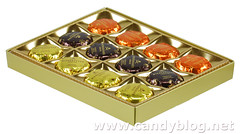
The box was very simple, as are most of their packages. It was a paperboard box with a metallic gold plastic tray with little sections for each piece of candy. It protected the pieces extremely well (this was early in my trip and had to go on and off the bus every day for nearly 1,000 kilometers plus the flights home). So the inside did well, but the exterior got quite dinged up. Since it was a seasonal product it was extremely fresh, the centers were soft and moist.
Arabisch-Mocca - toasty flavors of coffee and a little hint of chocolate in the center. The marzipan has more of a toffee and coffee flavor than anything almond. The dark chocolate shell seals it all up and has a nice bittersweet component that also gives it a creamy start.
Dattel-Honig is the only milk chocolate piece of the set. It smells like ripe bananas. In fact, it tastes like ripe bananas. Like actual fermented bananas, with a light alcoholic and tangy note towards the top. The milk chocolate and the dates keep it all rather sweet. I didn’t catch much on the honey side of things. Ingwer is one of my favorite bars from Niederegger. The little pattie version is a gem as well. The ginger is soft and glace style, the dark chocolate keeps it all from being to sweet or sticky. There’s less chocolate in this version than the bar, and more of an alcoholic bite as well.
(Disclosure Note: The trip to Germany was sponsored, so I did not pay for my airfare, ground transportation, accommodations or food while I was there. At the factory tours we were given generous samples to consume on site as well as some to bring home. Any reviews of those products will be noted as to that fact. But I also brought a couple hundred Euros with me and spent them liberally and almost exclusively on candy both from the companies we were introduced to as well as many other Germany/European products that I found in my prowlings of grocery stores, department stores and the factory outlets.) Related CandiesTuesday, April 17, 2012
Rolo Minis
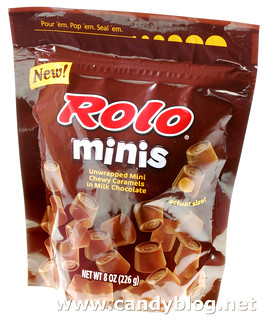
Rolos are available in two formats currently, the rolls with an individual serving and foil wrapped versions which are usually sold in mixes in bags along with other Hershey’s favorites. (Here’s an early Candy Blog review of Rolos.) Rolo Minis are new from Hershey’s, to go with the other items in the new Hershey’s minis line like Hershey’s Drops and Reese’s Peanut Butter Cup Minis. They’re a smaller version of the popular candy, though might not have the precise ratios of elements. The point, I guess, is to provide candies that don’t have all that messy packaging:
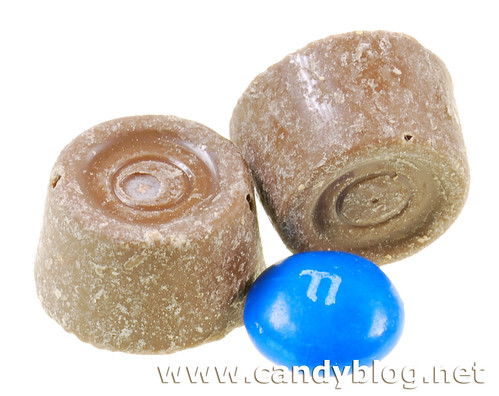
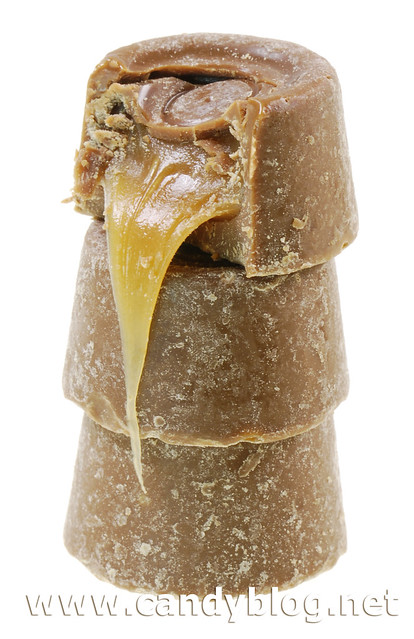
Why is it called a Rolo? One of the key features wasn’t what the candy was, but how it was packaged, it was a roll. That’s it. But here it is in a bag. They kind of roll, but just in small circles. They’re just little knobs of milk chocolate with a chewy caramel filling. That could be called anything. Geometrically speaking, the form of a Rolo is called frustum-shaped. That is, a cone that has had its pointy end lopped off. So the base is wider than the top. In the case of Rolos, there’s also a little rim around the top, which has no purpose as far as I know. There is no logo or any other branding on the candy itself. The pieces are rather scuffed up from rolling around in that bag. In fact, they’ve come all the way from England, where they were made. Seemed a little odd to me, but these are imported from England and made by, well, I’m guessing Nestle.
Though the chocolate is a bit dry looking, it’s actually pretty good. It’s smooth enough to melt well, the caramel center is stiff enough to provide a good chew but not so hard to pull out any teeth. They remind me of a softer version of Milk Duds back when they were made with real milk chocolate. Overall, they’re much better, less sweet and smoother than the large version of Rolos. I found myself munching on these a lot more readily than the regular Rolos. They go well in a mix, too, with some nuts and pretzels. Related Candies
POSTED BY Cybele AT 4:24 pm Candy • Morselization • Review • Hershey's • Caramel • Chocolate • Kosher • 6-Tempting • United Kingdom • Target • Friday, April 13, 2012
Twizzlers Chocolate Twists
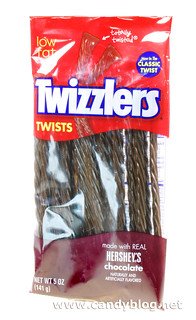
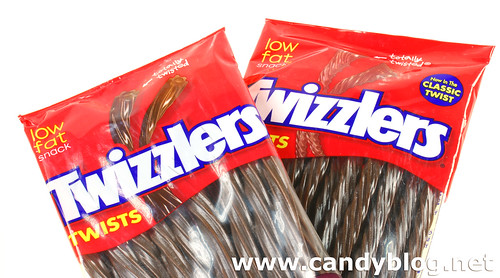
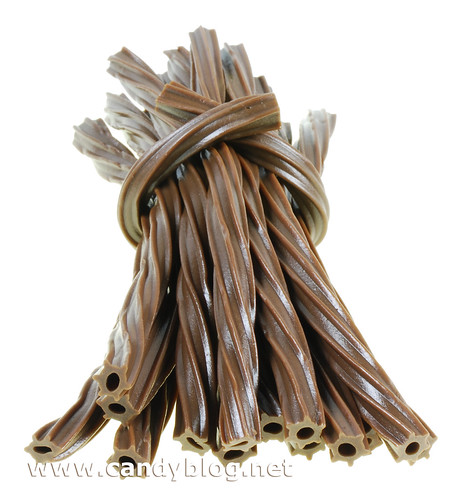
So here it is, nearly four years later, and Hershey’s has heard the requests and responded with the new improved Now in the Classic Twist version. We’re at a crossover period at the moment, where both versions are on store shelves, so I poked around and picked up both at different stores at different times. I also dug out the wrapper from my 2008 review so I could do a full comparison between the versions. The packages differ in very small ways. But if you’re looking for the return to the classic twist, look for the little blue dot that says Now in the Classic Twist.
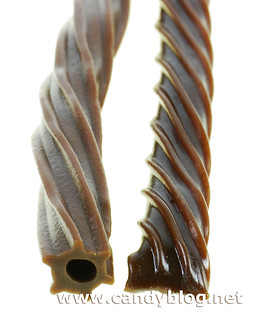
First, the packages are virtually identical. The top is the Twizzler red with the blue outlined white Twizzlers logo. The clear center bit of the package shows the candy, which is the best way to tell them apart, as is the image at the top. The “Classic” Twizzlers have crimped ends. The revised formula, which is on its way out, has an open end. The little diagram at the top of the package shows this and points to them with the text “totally twisted” with an arrow next to it. The thing of special note is that the 2012 version has a (r) mark next to it.
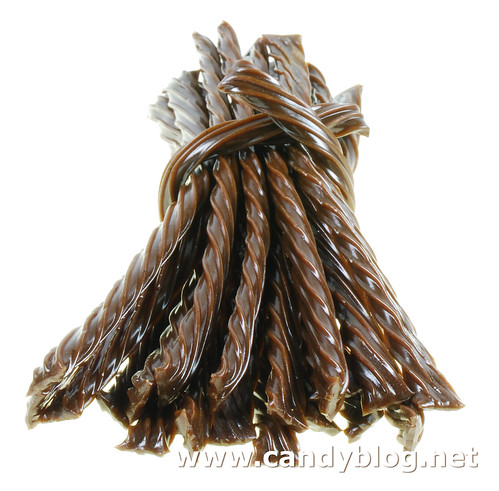
So I’ll start just with a straight review of the Classic Twist Chocolate Twizzlers. The expiration date is November 2012. Actually, nowhere on the package does this say that they’re Chocolate Twizzlers. It just says on the lower right of the front that it’s made with real Hershey’s chocolate. Otherwise, they’re just Twizzlers Twists. It’s as if Hershey’s thinks that saying “made with chocolate” is a flavor. The twists are nicely made, glossy and consistent. There were exactly 20 twists in my package. They’re slightly flattened on one end, but otherwise a soft of oval tube with set of six twisted ribs. The scent is mildly cocoa, a little on the woodsy side. They’re stiff but flexible. The bite is soft enough to cleave off easily without much pull. The base of the recipe is wheat flour (the second ingredient after corn syrup), so it’s a sort of doughy chew. The flavor is very clean, again it’s quite woodsy and not terribly deep. It’s like weak cocoa or slightly warm chocolate milk. I found it pleasant enough though not satisfying as a chocolate candy, and not really compelling enough for a snack either texture-wise or with enough flavor intensity to hold my interest.
Inside this package there were only 15 twists, even though the packages weighed the same. They’re actually shorter, so I can only assume that they’re simply beefier than the other version.
They look just the same as the 2008 version. No crimped ends, slightly milkier color than the crimped end Classic.They’re soft, much softer than the other version. They smell sweet but not much like chocolate or really much else. The chew is doughy and soft, the texture is kind of sticky but smooth overall. The chocolate flavor is bland and lacks the slightly bitter edge of the Classic. Mostly it’s the texture that’s different here, globs of it would stick to the edge of my molars and gums. Probably a dental nightmare.
There are 20 twists in the new bag, 15 in the old bag. So the new twists are 25% lighter. But the portion size on the package is still the same. It says on all three that 4 twists weigh 38 grams and provide 130 calories. But how could that be? If Hershey’s is providing information that’s off by 25%, isn’t that causing problems with portion control? And which one is correct? The ingredients from the version I reviewed in 2008, which were uncrimped, look more like the current crimped version than they do with the uncrimped 2012 version. How can that be explained?
Basically, it’s not like you have a choice. The people spoke, consumers said they preferred the old crimped twists ... whatever the ingredients happen to be ...with or without palm oil, with or without soy lecithin.
Given the choice between both versions ... I choose neither. I stick by my 4 out of 10 rating from four years ago. It’s a middling candy. If you want a cocoa-rich flour based product, have an Oreo. If you want a chewy strip of candy, have a real Twizzler. The chocolate versions are just lacking zing. The new ones are prettier, that’s about all I can say. Related Candies
Thursday, April 12, 2012
Pocky Peanut Crush
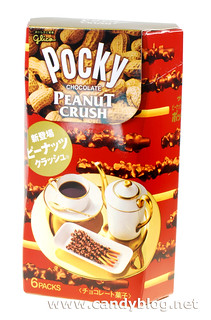
The package is big (and came with a similarly hefty price tag) with six little packages of four sticks in a cool flip top box. The serving suggestion is black coffee served in fine china on a gold tray. I’m going to just eat it out of the cellophane package with some water.
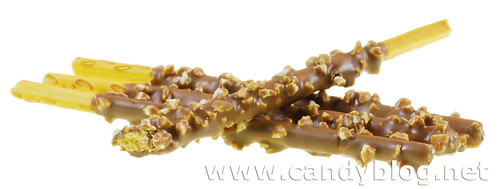
They smell great. It’s a dark roasted scent that’s fresh and reminded me immediately (oddly enough) of a really good Nutty Buddy ice cream cone. The crushed peanuts adhere to the short cookie stick with some middling milk chocolate (it might be mockolate, a chocolate compound with some extra vegetable fat in it). The flavors really are about the peanuts and the chocolate is just there to keep it all stuck together and add a little sweet creamy note. The cookie stick of Pocky isn’t very sweet and though it’s crispy, I woudn’t really call it light either. It has a light toasted flavor ... think of it as the difference between a biscuit and a scone. The whole thing is barely sweet, more like a snack, thought’s not salty either. I would definitely buy these again if not for the expense - it was $5.49 for the box which means almost a buck for each little packet inside. But each package was rather filling and satisfying, a good blend of protein, carbs and easy sugar. I have no idea about Glico’s environmental standing or their ethical sourcing of ingredients. The product contains peanuts, wheat, dairy, almonds and soy. But maybe it’s shellfish and egg free, you’ll have to check with the maker. Related Candies
Tuesday, April 10, 2012
David’s Signature Beans Jelly Bean Sampler
The collaboration of David Klein with the Herman Goelitz Candy Co. came to an end when Klein was bought out. His settlement meant that he was paid a royalty for every bean sold (with a yearly cap) but couldn’t compete in the jelly bean category until that contract came to an end. Since its recent expiration, Klein has been collaborating with Marich Confectionery with family members of those that developed the original Jelly Belly in the 70s. The new line of David’s Signature Beyond Gourmet Jelly Beans are now available.
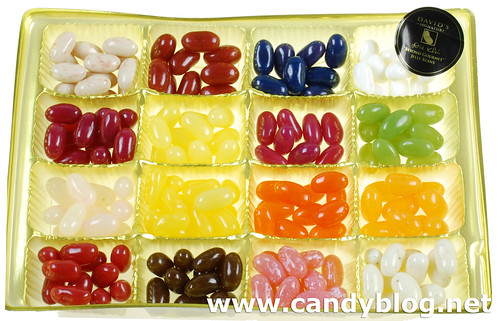
The beans are made with real fruit, flavorings and all natural colors. It’s a little frustrating to find out definitive information about the product line, the Leaf website has a couple of press releases, but no standard product information. The Facebook page for the product has a picture of their flavor offerings, which include wasabi, habanero, Thai chili and chipotle, but those weren’t in my sampler. I found this sampler box on Amazon (sold by Oregon Trail Foods) for $16.95 for a half pound assortment of 16 flavors (plus shipping). I ordered it on Thursday and it arrived the following Monday. The box is a bit problematic, the little sections of the tray allow the beans to hop from one bin to another when the box is tipped, so when I opened mine I had to re-sort my beans. This was difficult for several of the colors which were extremely similar. While the beans inside look great, I was disappointed at the flimsy and generic package that really didn’t entice me or create any excitement about what was inside. For something over $32 a pound, I expect a little of it to go into packaging.
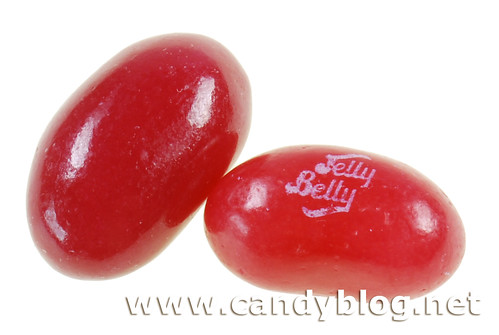
David’s Signature Beans are unbranded and look like little pieces of polished glass. Each one was nearly perfect and consistently shaped. They’re a little larger than the Jelly Belly, which is on the right above. (The flavor on the left is cranberry, the one on the right is the Jelly Belly Snapple Cranberry-Raspberry, which is also all natural.)
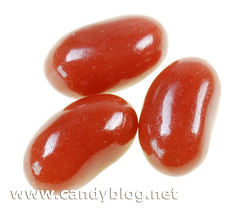
The flavor is a little bit tart and a little bit sweet. But it’s nothing like real fresh cherries or fake cherries to me. It reminds me of cherry juice, in that it’s a deep and has a sort of boiled berry jam note to it, but nothing distinct.
The construction of the beans is very consistent. The centers were mostly colored, though not with some sort of imposed artificiality, it’s just whatever the combination of real fruits made them. In some cases the centers matched the shell like the Black Cherry. In other cases they were colorless.
The flavor is floral, at first it’s like a raspberry flavor, but then it gets that little kick that I associate with blueberry. It’s a tannin note, kind of like tea. It’s a rather confused tasting bean though, because it ends with a little creamy note, almost a vanilla. So think of it more like a blueberry smoothie.
The shell is crisp, but not thick. The flavor is a very strong coconut milk, sweet and with that aromatic nuttiness. There’s no actual shredded coconut in the center, but the flavor is really authentic. It didn’t have that oily note that brings to mind hot and humid days by the pool with suntan oil, it was a bit cleaner than that.
Bacon is something I consider a novelty. Bacon is also not a food I eat. I’d say it’s because I don’t eat pork, which is true (though I do eat candies with gelatin) but to go further, even as an omnivorous kid I didn’t like bacon. I don’t want a jelly bean that tastes like bacon. I’m not eating it.
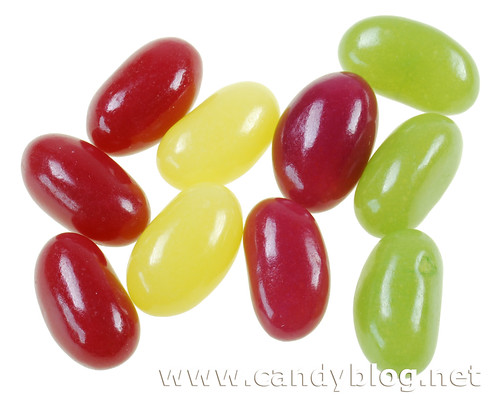
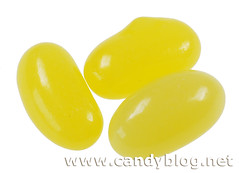
Cranberry is very tart and bracing. There’s a light vanilla note to it as well and maybe a little hint of concord grape. I really like a good puckery cranberry, and I think if I were designing them, I’d make it even more sour. That said, it’s still pretty well rounded and tastes more like dried cranberries than some sort of cranberry fruit juice cocktail. Ginger is fascinating. It’s a bit of a tougher bean, the shell seems a little crisper. The flavor is immediately rooty, with lots of woodsy notes and less of that lemony tang that fresh ginger juice can have and more of the deep honey notes of ginger ale. I would buy a bag of these, they also went well with the lemon, which is good, because they look nearly the same. Grape was a good flavor, it was like grape juice, but missing that concord note that the Japanese seem to have pegged really well in many of their candies. Green Apple was also very authentic, it was like unsweetened apple sauce, a cooked apple flavor without as much sour zing as a fresh apple.
I don’t know quite why I’d want to eat salted sugar, but there it is. I can understand a salted caramel jelly bean, but just a salted jelly bean is mystifying. It was a cross between eating cake batter and licking my own sweat off my arms. It was kind of like a sports drink, but without the actual flavor of fruit juice.
I didn’t catch much in the way of zest, which is too bad, because I think that would have sent this one over the top. Though I wasn’t as keen on this one as I’d hoped, it paired very well with other beans such as strawberry and ginger.
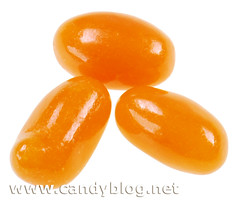
Again the zest notes were missing, so it was more like a really good glass of Tang with an extra spoonful of the concentrate added to it. Of course if this was called Fanta Orange, I’d want to add it to my soda pop mix and call it fabulous.
It’s a combination of apricot and peach, with a lot of tartness, quite a bit of “fuzz” flavor and a clean finish. It reminded me of baby food, really good peach puree.
I think what distinguishes pomegranate from cranberry is the floral notes for pomegranate. It was quite reminiscent of raspberry with a sort of dry finish like Key limes have when compared to Persian limes.
Of course this makes me wish for a whole set of soda flavored beans in exotics like tonic water, birch beer and guarana.
It’s sweet and tangy, but missing a bit of the floral note that I get with many other strawberry flavors. Instead this was more like jam than fresh strawberry. But these also varied, some were larger than others and some were tarter than others. It’s best in combination and actually went well with coconut.
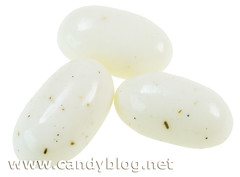
There were real little bits of vanilla seeds from the pod which stuck with me for a while. That’s fine because vanilla went well with most of the other flavors, including ginger, root beer and strawberry. Overall, they’re wonderfully vibrant even if I’m not fond of the direction of each of the beans. However, the price is prohibitive and not quite justified by the product. While I like the use of real, whole ingredients, the packaging was not worthy of a product that’s so expensive. My guess is that if they do catch on they economies of scale might bring things more into line with my expectations ($10 a pound is still steep in my world). The thing that would set them apart though would be the quirkier flavors such as ginger and perhaps other spices. I am curious to try the other more exotic flavors, but I’ll wait to find them in stores when I’m not paying shipping on top. Other bean flavors I am interested in, if someone wants to make them: cola, lemon cola, rum, gin, molasses, peppermint, cucumber, celery, spearmint, cardamom, lavender honey and an intense all natural black licorice. You can read more about the history of David Klein and Jelly Belly on MSNBC. Related Candies
POSTED BY Cybele AT 2:51 pm All Natural • Candy • Review • Leaf Brand Candy • Coconut • Ginger • Jelly Candy • 7-Worth It • United States • Thursday, April 5, 2012
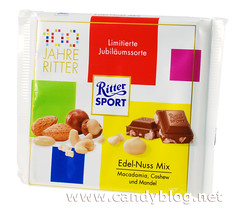
Ritter Sport 100th Anniversary Edel-Nuss Mix + Bonus Previews
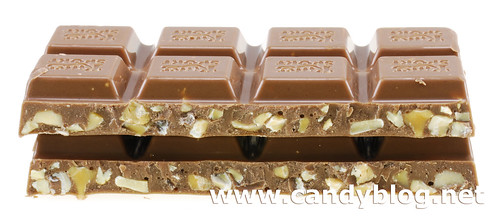
Though the company is celebrating their 100th year, the Ritter Sport square bar, as we’ve come to know it, is not quite as old as that. The Sport bars were introduced in 1932 ... so in 20 years you can look forward to another centennial. The bar is a simple one, just milk chocolate with a blend of crushed nuts: almonds, cashews & macadamia nuts.
I picked up my bar in Germany at Kaufhof in December, but they may be available at import shops in North America and airports during the year. The bar is lovely and really quite tasty. It’s odd, the milk chocolate is sweet and smooth, as usual. The nuts are crunch and plentiful. But the flavor is quite interesting. For a while after munching on the bar I was convinced there was honey in it, it has that same sort of toasted almond and honey flavor that Toblerone has. But there was none in the ingredients, so I can only credit the toasting of the nuts that give it that soft, sweet and nutty flavor. I would buy this bar regularly. It doesn’t quite dethrone my favorite, the Knusperflakes (Corn Flakes) bar, but it’s terrific in its own right.
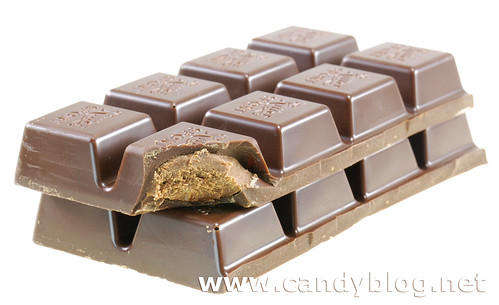
Ritter Sport Dunkle Pfefferminz is a dark chocolate bar with a peppermint flavored dark chocolate cream center. It also features a dash of alcohol, giving it a creme de menthe sort of blast.
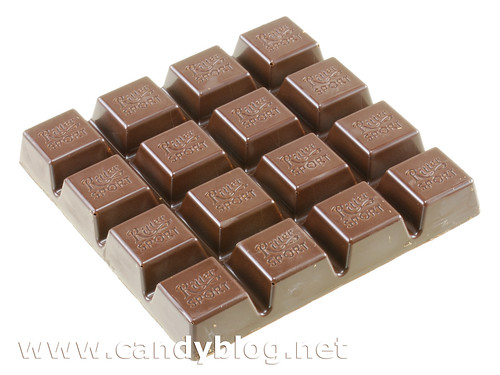
The bar looked great.
The cream center was smooth and had a strong peppermint flavor, but not so strong as to overpower the dark chocolate notes, which were slightly acidic and woodsy. It’s pretty decadent and silky, I didn’t feel the need to eat more than two or three sections at a sitting. I hope this comes to the United States at some point, it’s a keeper and unlike anything else we have on the market.
One other item I picked up in the back room was a bag of these little bon bons. They were simply called Pfefferminz and in a clear plastic bag. Each individual piece was wrapped in an unmarked aqua wrapper. I have no idea what their purpose was, but the center was not quite the same as the Dunkle bar. They were good, but milk chocolate and a little more fudgy and firm.
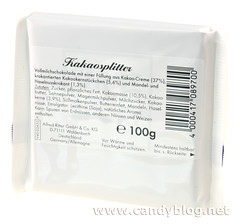
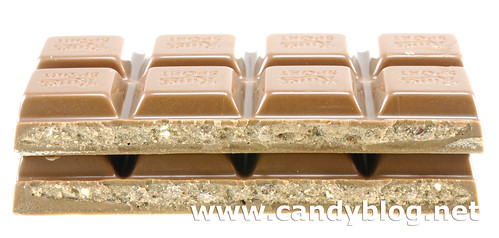
I believe kakaosplitter (kakaokernstuckchen) is the German word for cacao nib. The bar is milk chocolate and features a firm chocolate cream filling studded with crispy cacao nibs.
The bar is quite milky and has a good nutty flavor overall. The nibs are toasted in a way that seems to have caramelized them. So instead of being chewy or dense, they’re quite light and crispy, but with a sort of uneven chocolate flavor, depending on the bite. I liked the treatment of the nibs, but I didn’t care for the overall sweetness of the bar. It makes me wish I’d found this hazelnut and nib solid bar.
The last bar I picked up looked just like the others on the outside, a generic white with the simple name of Ritter Sport Kokosmakrone. Honestly, I didn’t know what I was picking up because I didn’t know what Kokosmakrone was, I thought it was another cocoa nib confection. Instead it’s a coconut cream. How fun! Aside from the Mounds and Almond Joy bars, there’s not much in the real coconut realm in candy bars in the United States.
The bar is milk chocolate again with a white cream filling with both toasted coconut and rice flakes for crunch. It smells an awful lot like coconut, the chocolate is infused with it to the point that the chocolate flavors are lost. I had to sequester the bar in its own ziploc bag before I finished it because I was afraid it was going to make my 100 Jahre bar taste weird. The filling is sweet and milky with a little salty hint. The coconut is more of a flavor than a texture, the crispies add a new dimension of texture that you don’t really get in American coconut candies. Mostly I like this because it’s not like anything else you can get for less than $2. But, if I want coconut, I’m probably going to go for a Mounds bar. In all, I love Ritter Sport’s sense of adventure. The bars are made in a factory that processes a lot of different nuts, soy, dairy and products that may contain gluten. The Ritter Sport company sources much of their cacao from South and Central American and says it’s committed to ethical sourcing. Related Candies
POSTED BY Cybele AT 1:00 pm All Natural • Candy • Review • Ritter Sport • Chocolate • Coconut • Limited Edition • Mints • Nibs • Nuts • 8-Tasty • Germany • Wednesday, April 4, 2012
Jelly Belly Snapple Jelly Beans
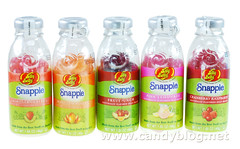
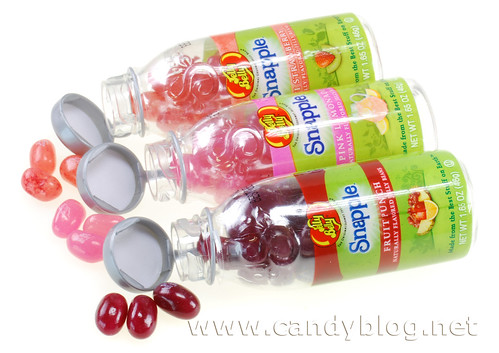
The candies come in a variety of packages from bulk mixes, peg bags to individual flavors. For the samples I got from Jelly Belly, they came in these cute little plastic bottles in the same shape as the Snapple glass bottles. They’re each filled with 1.65 ounces of one of the individual flavors.But you’re more likely to see packages with a mix of all five. Though I like just buying the flavors I like, in this instance the packages are unsustainable and wasteful.
As an American who remembers when Snapple was introduced nationally and their commercials with Wendy, the Snapple Lady I can say that I’ve always felt positive towards the brand. However, in all that time, I’ve probably had five or six of them. Even in my younger years when I did drink juice (rarely soda, even then), Snapple was always a little too bland for me. (I also don’t know how a company can say it’s made from the best stuff on earth if they’re using aspartame.)
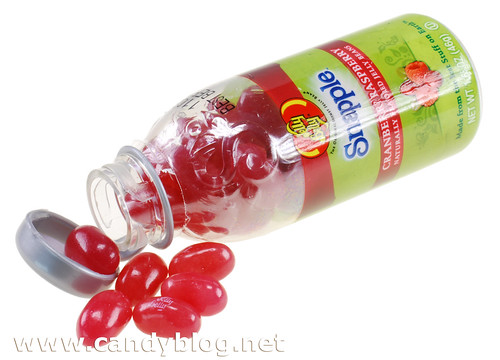
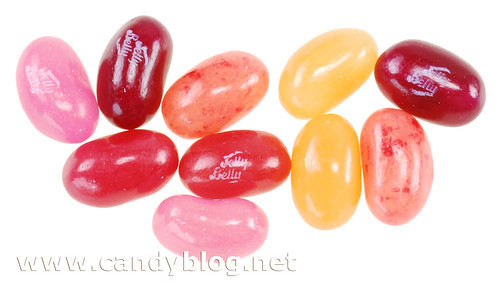
The bottles have a little twist off top with a ring that kept me from losing them (though I think if you pry them off, they’re like the rings from one of those spout milk jugs that cats love to play with until they end up under the fridge). Cranberry Raspberry are red with a light purple hue. They’re sweet and have a good floral berry flavor to them. There’s only a slight hint of tartness, which is too bad, because I love the zing of cranberries.
Pink Lemonade is kind of a weird product to start with. The beans here are quite pink and without much reason other than the fact that the color is in the name of the flavor. When I was a kid I thought that pink lemonade was pink because it had a touch of strawberry in it. But a little digging and I found out rather unsettling reasons for why early pink lemonade was pink. Anyway, Snapple’s classic Pink Lemonade is simply that, lemonade that’s been colored pink. This lemonade jelly bean is bland. There’s no tang, no real zest, just a mild lemon flavor. Kiwi Strawberry is salmon-pink. The flavor is quite nicely rounded. The strawberry is center stage, sweet and floral with those toasted sugar notes of cotton candy. There’s a hint of sour and a pleasant and refreshing melon-kiwi note to it.
Mango Madness is orange colored. The flavor is a mild mango or perhaps peach flavor. It lacks the intense pine and tartness that real mangoes have. Instead it’s rather one-note with just the sweet, Indian mango flavor. Fruit Punch is a luxurious looking dark red color, a color I might mistake for root beer. I wasn’t looking forward to it, as fruit punch has never been a favorite flavor of mine. The notes are distinctive and have that authentic fruit punch flavor (is that guava and pineapple?) but still tastes natural. There are lots of red berry and cherry notes and a little twang of pineapple and either guava or papaya (maybe both). It was all sweetness with only a fleeting burst of tartness as part of the candy shell. Overall, the flavors were mild. If you’re the type of person who tried Jelly Belly and thought, “My goodness, these would be good if they were less flavorful.” Then perhaps these were the Jelly Belly you were waiting for. I think they give naturally flavored & colored candy a bad reputation. I already know Jelly Belly can make good tasting beans without artificial flavors and colors, so I can only surmise that this is what Snapple customers want. If I were a huge fan of these, I could see myself re-using the little bottles by buying bags of the mixes and refilling for easy portioning. This mix isn’t really to my taste, so I don’t see myself buying it again. I can see it getting a lot of play in places where you don’t normally see Jelly Belly just because of the brand and flavor recognition of Snapple. Jelly Belly does most of these flavors better in their Superfruit Mix or their Citrus Mix. Related Candies
POSTED BY Cybele AT 11:39 am All Natural • Candy • Review • Jelly Belly • Jelly Candy • Kosher • 5-Pleasant • United States • Monday, April 2, 2012
Gimbal’s Sour Gourmet Jelly Beans
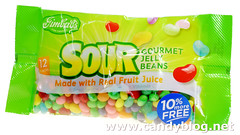
The jelly bean mix has a gourmet price point, at $4.49 for me at the CVS, but the bag is big and it’s made in the USA. The mix includes 12 flavors in bold colors.
The beans are absolutely lovely to look at. They’re small and well made, each was quite perfect. The Gimbal’s factory advertises that it’s free of most major allergens, including peanuts, tree nuts, dairy, eggs, gluten, gelatin and soy. As a jelly bean product they’re also fat free and contain no high fructose corn syrup (but I’ve never actually seen a jelly bean made with HFCS). The front of the package says they’re made with real fruit juice, and that’d be apple juice. It also says that it’s a good source of Vitamin C, but that’s only 10% of your RDA in a serving of 37 beans (about 1.4 ounces). But as much as they tout the freedom from allergens, there are still plenty of other ingredients some folks may avoid, such as artificial flavors and colors.
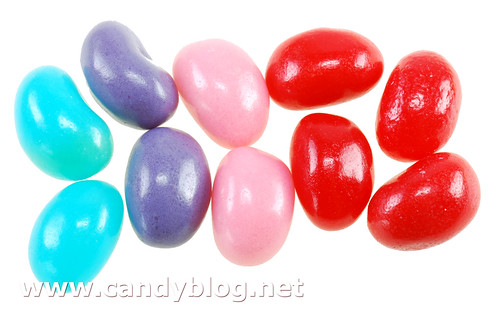
Most of the beans were opaque, but in the case of beans of similar colors, one was translucent, the other opaque. The structure of the bean is the same as other jelly beans. A jelly center (modified food starch give it its smooth texture) covered in a grainy and flavored shell. In the case of these beans, they jelly center is the sour part, so the sourness goes through and through. They’re tiny, sized like most other gourmet beans like Jelly Belly. Sour Lemon was fully formed, a mix of juice and peel but with a more boiled marmalade note than a raw flavor. Sour Grapefruit was fantastic. There was a lot of zest and that pine-type bitterness along with a biting tang of juice. Sour Tangerine was sour and juicy but unlike the other two citruses, the zest notes didn’t come out until the very end. Sour Mango was also orange, but opaque. The flavor was similar to peach, and if I wasn’t told it was mango, I probably would have guessed that. It was soft and tart but had that fuzzy fruit flavor that mangoes and peaches share.
Sour Watermelon was the darker green bean. It was pretty good, it reminded me a lot of Jolly Ranchers in the best way possible. Sour Apple was kind of difficult for me to like. At first I though it was watermelon, it was just too vague. There was an authentic note of apple to it, but not much else. Sour Lime was almost a key lime. There was soft vanilla note to it but it really finished sour.
Sour Blueberry was refreshing, it had a good berry note to it, almost a raspberry. I wouldn’t say it was really blueberry, but still quite fun. Sour Grape is an unusual flavor for jelly beans. I see it a lot in hard candies but not so much in jelly beans or gummis. This grape is much like a Pixy Stix, tart and with that malic acid tangy bite and vague artificial grape flavor of soda. Sour Strawberry had a great mix of flavors, it really had a nice floral start, like a fluffy wad of cotton candy. Then the flavor developed with strong tartness and finished with strawberry jam. Sour Pomegranate had a lot of very dark floral berry notes to it. It never quite rang true as pomegranate, but it was still a very good bean, not as sour as the others. Sour Cherry was well done. The flavor was bold and less medicinal than some I’ve had, with green notes and of course that sour finish that most of the beans had. Overall, it was a good bunch of beans. Even those that I didn’t really like that much such as cherry or mango were still quite good enough that I just ate them instead of trying to pick them out. It’s hard to tell some beans apart unless you’re someplace well lit, so sort before going to movies if you really don’t want to get a flavor you dislike. I did like this flavor set better than the Jelly Belly sour variety which only has five flavors, but that’s purely personal preference. The intensity satisfied me quite quickly, without giving me acidic burns on my tongue. The price is a bit high compared to generic beans but less than half of what you’d pay for Jelly Belly. They do pack quite a punch and I’m unlikely to finish this 13 ounce bag before Easter even with daily grazing. Related Candies
POSTED BY Cybele AT 11:48 am Candy • Review • Easter • Gimbal's Candy • Jelly Candy • Kosher • Sour • 8-Tasty • United States • Sav-On/CVS • 
|
Meticulously photographed and documented reviews of candy from around the world. And the occasional other sweet adventures. Open your mouth, expand your mind.
  SEARCHSearch the Candy Blog archives

    
FEATURED NEWS ITEMS
COPYRIGHT NOTICEAll content (text and photos unless otherwise credited) is copyright 2005-2026 by Cybele May Please do not use my photos without prior permission directly from me, they represent what I ate in preparation for these reviews and are not to be used for other purposes. Design by Hop Studios
|
||||||||||||||||||||||||||||||||||||||||||||||||||||||||||||||||||||||||||||||||||||||||||||||||||||||||||||


 SUPERB
 YUMMY
YUMMY  TASTY
TASTY  WORTH IT
  TEMPTING
  PLEASANT
  BENIGN
  UNAPPEALING
  APPALLING
  INEDIBLE